

Fort Collins Divorce Lawyer
Divorce does not just end a marriage. It redraws the boundaries of your daily life, your finances, and your relationship with your children, often all at once. The Law Office of Stephen Vertucci represents individuals facing that reality in Fort Collins. We also represent clients facing divorce in Bellvue and other communities throughout northern Colorado.
The decisions made during that process, about where your children live, how property is divided, and what support looks like, follow you long after the paperwork is done. Working with a Fort Collins divorce lawyer from the start means your rights are protected before key decisions are made permanent.
Contact a Fort Collins Divorce Lawyer
Divorce in Fort Collins Involves More Than Ending a Marriage
Colorado law treats divorce as the legal dissolution of a marriage, but the paperwork only captures part of what is actually happening. Every case turns on questions that matter far beyond the courtroom: how finances get divided, where children spend their time, and what the next chapter actually looks like. Colorado is a no-fault state, meaning either spouse can file for divorce by stating the marriage is irretrievably broken. The court will proceed on that basis regardless of whether the other spouse agrees.
That procedural simplicity does not mean the process is easy. Property, support, and parenting arrangements carry consequences that last long after the divorce is finalized. The difference between a reasonable outcome and a damaging one often comes down to decisions made early, before most people realize the stakes.

How a Fort Collins Divorce Lawyer Helps Protect Your Future
People often underestimate how early in a divorce case the most important decisions get made. Early court rulings on parenting time, financial support, and access to shared accounts can shape the entire trajectory of the case. Those early positions frequently influence what the outcome looks like.
An attorney’s value shows up long before any hearing is scheduled. Our attorneys help clients understand what family law requires of them, identify assets and debts that need to be addressed, and recognize early decisions that could complicate the case if made without an attorney’s guidance. By the time a dispute forces the issue, some options are already off the table.
Key Decisions That Shape the Outcome of a Divorce Case
Every agreement reached or ruling issued during a divorce becomes a binding court decision, and those decisions govern real life, from parenting schedules to financial obligations, often for years. Knowing which issues carry the most weight going in means you are positioned to protect what matters most, not just react to what the other side does.
Core Issues That Determine Divorce Outcomes
- Parenting and decision-making responsibilities: Colorado courts assign parental responsibilities based on the best interests of the child, addressing both physical parenting time and who makes decisions about the child’s education, healthcare, and similar matters.
- Property and debt division: Colorado divides marital property based on what the court considers fair, a standard known as equitable distribution. Whether an asset is considered shared marital property or one spouse’s separate property can significantly affect how it is divided.
- Spousal maintenance: Colorado courts may award maintenance based on factors including the length of the marriage, each spouse’s financial situation, and the ability to earn income going forward. Unlike some states, Colorado does not consider marital fault when determining whether maintenance is appropriate.
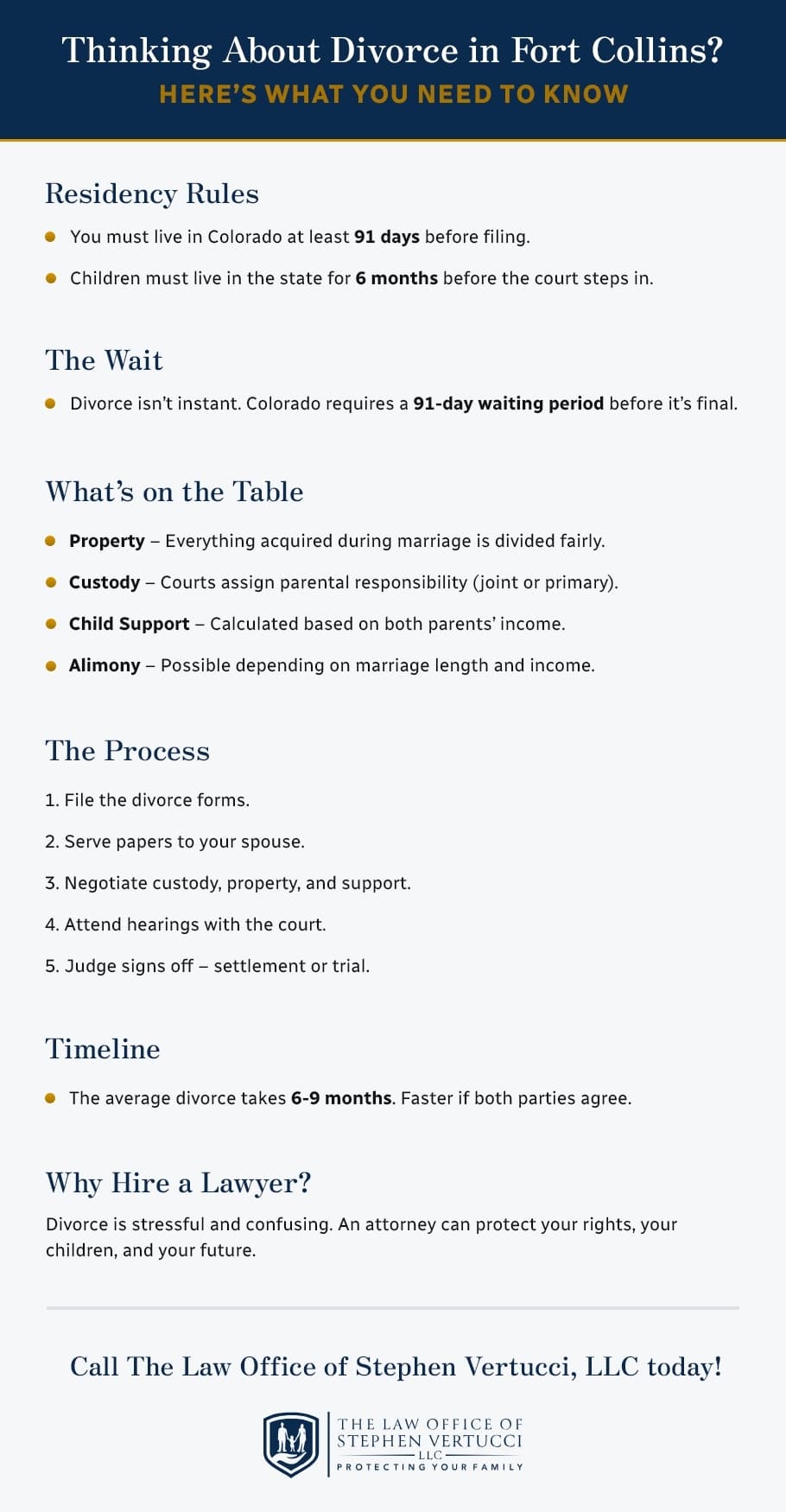
Fort Collins divorce infographic explaining Colorado residency rules, the 91-day waiting period, property division, custody, child support, alimony, and divorce timelines.
Having an experienced divorce attorney can help you prepare for hearings, negotiations, and trial if your case cannot be resolved outside court.
Why Choose The Law Office of Stephen Vertucci for Your Fort Collins Divorce Case?
Stephen Vertucci has spent his entire legal career in family law, and that focus shows in how cases are prepared and argued. Our attorneys understand that no two divorces are alike. A high-asset case involving a business or retirement accounts requires a different strategy than a case centered on parenting disputes. We build the strategy around what you are actually trying to protect, whether that is time with your children, a business, a retirement account, or your financial footing after the marriage ends.
Our attorneys are prepared to negotiate settlements that hold up over time and to take the case to court when the other side leaves no better option. When you work with a Fort Collins divorce lawyer from our firm, you work with attorneys who are organized, responsive, and genuinely invested in the outcome.
Steve Vertucci has dedicated his entire legal career to family law, helping clients through some of the most difficult times in their lives with thoughtful strategy and passionate advocacy.


Talk to The Law Office of Stephen Vertucci Before Making Decisions That Could Affect Your Future
The decisions made early in a divorce case are often the hardest to undo. The Law Office of Stephen Vertucci gives you clear guidance before those decisions are finalized, not after. If you are facing divorce in Fort Collins, call (970) 900-1800 to speak with a Fort Collins divorce lawyer who will assess your situation honestly and outline your options.
Frequently Asked Questions About Divorce in Fort Collins
How To Start the Divorce Process?
Starting a divorce in Colorado typically begins by filing a Petition for Dissolution of Marriage with the court. A Fort Collins divorce lawyer helps confirm residency requirements, prepare the required documents, and organize financial and parenting information before filing. Careful preparation at the beginning helps prevent delays and keeps the case moving through the court process more efficiently.
Full blog: How To Start the Divorce Process?
How Long Does It Take to Get a Divorce?
The timeline varies depending on whether spouses agree on major issues. In Colorado, the law requires at least 91 days from the date the petition is served or filed jointly before a court can finalize the divorce. Legal guidance can help address disputes over property, parenting, support, and required disclosures so the process does not take longer than necessary. Cases involving agreements usually move faster than those with several contested issues.
Full blog: How Long Does it Take to Get a Divorce?
How Are Assets Divided in a Divorce?
Colorado follows equitable distribution rules for marital property. This means the court divides assets in a way considered fair rather than automatically splitting everything equally. An attorney can help evaluate what qualifies as marital property, debt, separate property, retirement accounts, and business interests so the court can determine an appropriate division. Accurate valuation often plays a major role in reaching a fair outcome.
Full blog: How Are Assets Divided in a Divorce?
How Long Do You Have to Pay Spousal Support?
Spousal support, also called maintenance, depends on factors such as the length of the marriage, each spouse’s financial situation, and the standard of living during the relationship. A Fort Collins divorce lawyer can explain how Colorado courts evaluate income, need, earning ability, and the length of time when deciding whether support is temporary or permanent. Support may also change when financial circumstances shift after the entry of orders.
Full blog: How Long Do You Have to Pay Spousal Support?
Can a Divorce Be Denied?
Colorado is a no-fault divorce state, meaning the court does not require proof of wrongdoing. When one spouse states that the marriage is irretrievably broken, the court will generally allow the divorce to proceed. Legal guidance can help individuals navigate the requirements and address disputes involving children, finances, property, or temporary court orders.
Full blog: Can a Divorce Be Denied?

Stephen Vertucci
Founding Attorney
Steve focuses exclusively on family law and brings over a decade of litigation experience to every case. He’s known for providing thoughtful strategies and passionate advocacy in high-conflict divorce and custody matters.

This page has been written, edited, and reviewed by a team of legal writers following comprehensive editorial guidelines. This page was approved by Founding Attorney Stephen Vertucci, who has more than two decades of litigation and family law experience.